
Guide to Spiritual Healing: What to Expect in Your First Session
Booking your first spiritual healing session can feel a bit like stepping into the unknown. You might be curious, a little nervous, or wondering what actually happens when you’re lying on that massage table.
Here’s the truth: spiritual healing sessions are far less mysterious than you might think. Most practitioners are warm, welcoming, and genuinely focused on creating a comfortable experience for you.
Whether you’re seeking relief from stress, emotional healing, or just curious about energy work, this guide will walk you through exactly what to expect, from the moment you book to the days after your session.
🌿 What Actually Is Spiritual Healing?
Spiritual healing is an umbrella term for various practices that work with your body’s energy system to promote balance, release blockages, and support your natural healing process.
Unlike traditional medicine that focuses solely on physical symptoms, spiritual healing addresses the whole person, your physical body, emotions, mental patterns, and spiritual wellbeing. Think of it as tuning an instrument that’s slightly out of key.
Common spiritual healing modalities include Reiki, energy healing, chakra balancing, sound healing, and shamanic practices. While the techniques vary, they all share a similar foundation: the belief that we’re all made of energy, and when that energy flows freely, we feel our best.
The good news? You don’t need to believe in anything specific for it to work. An open mind and willingness to experience something new is all you really need.
📋 Before Your Session: How to Prepare
✨ Setting Your Intention
Before you arrive, take a few minutes to reflect on why you’re booking this session. What do you hope to shift, release, or gain clarity on?
Your intention doesn’t need to be profound or perfectly articulated. It might be as simple as “I want to feel less anxious” or “I’m curious about energy work.” Writing it down can help clarify what you’re seeking.
Many practitioners will ask about your intention during the initial consultation, so having given it some thought helps you both work together more effectively.
👕 What to Wear
Wear comfortable, loose-fitting clothing made from natural fabrics like cotton or linen. You’ll be fully clothed throughout the session, so choose something you can relax in completely.
Layers are helpful since some people feel warm during energy work while others feel cool. Think yoga pants and a soft shirt rather than jeans and a button-up.
Remove jewellery, watches, and belts before the session. These can interfere with energy flow and make it harder for you to fully relax.
💧 Day-of Preparation
Here’s what practitioners typically recommend:
- Hydrate well before and after your session, water helps integrate energetic shifts
- Eat lightly an hour or two before, avoiding heavy meals that might make you uncomfortable lying down
- Avoid alcohol and recreational substances for at least 24 hours beforehand
- Arrive 10-15 minutes early to fill out paperwork and settle your mind
- Clear your schedule afterward if possible, you’ll want time to rest and integrate
Think of it like preparing for a massage rather than a doctor’s appointment. The more relaxed and present you are, the deeper your experience can be.
🙏 During Your Session: The Process Explained
The Initial Consultation
Your first session typically begins with a conversation. Your practitioner will ask about your health history, current challenges, and what you’re hoping to address, physically, emotionally, mentally, or spiritually.
This isn’t an interrogation. It’s a collaborative conversation that helps them understand how to best support you. Be honest about any physical conditions, medications, or emotional struggles you’re experiencing.
You’ll also likely sign some paperwork related to privacy and consent. Read through it, ask questions if anything’s unclear, and remember, you’re in control of your experience.
🛋️ Getting Comfortable
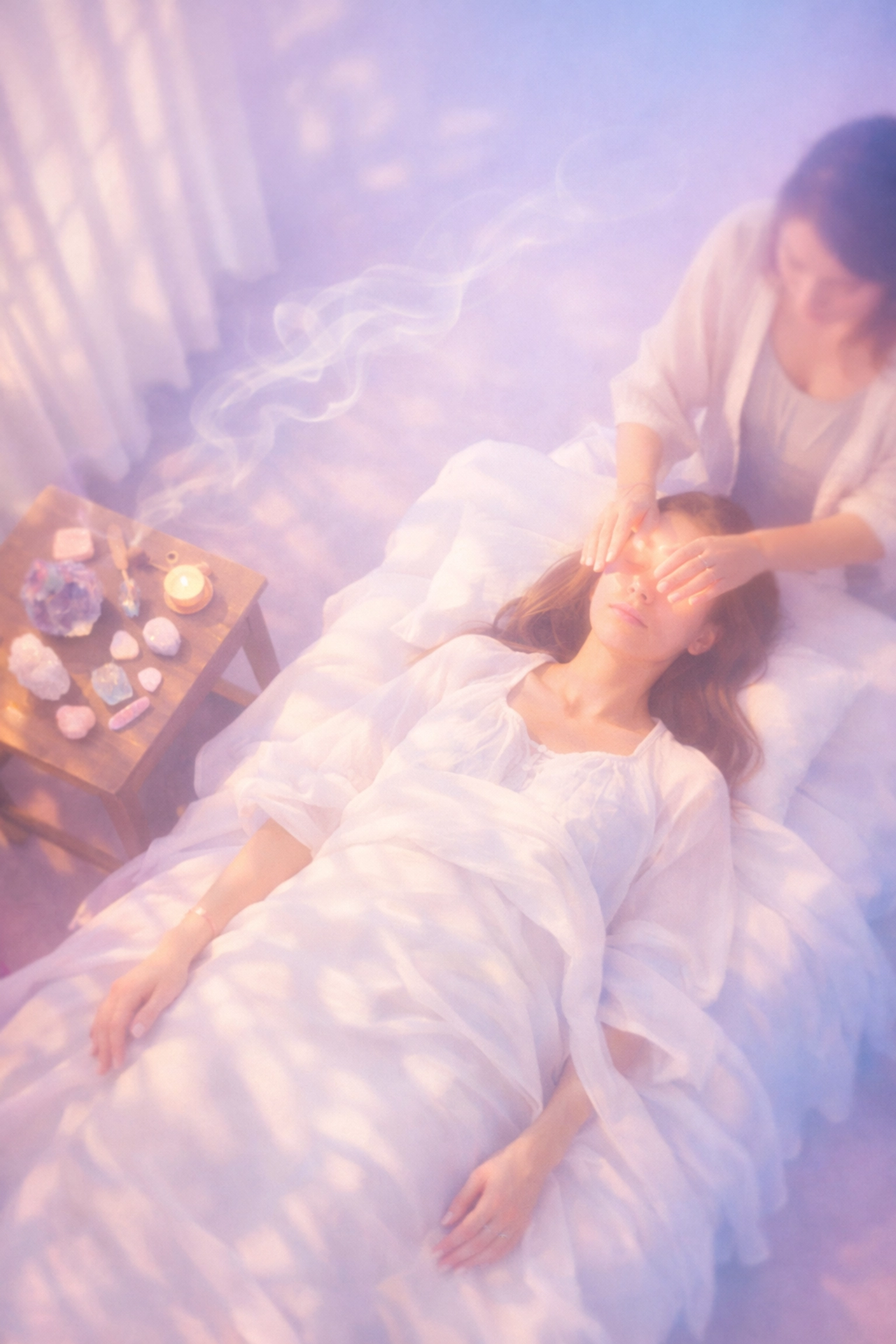
Once you’re ready, you’ll lie face-up on a padded massage table. The room will typically be dimly lit with soft music playing, creating a peaceful, meditative atmosphere.
Your practitioner might offer you an eye pillow to block out light and a blanket for warmth. Yes, you stay fully clothed. No, you don’t need to do anything special or “perform” relaxation.
Just breathe naturally and allow yourself to be present. If you fall asleep, that’s completely fine. Your body will still receive the healing work.
⚡ The Healing Work
Here’s what most spiritual healing sessions include:
Centering: Your practitioner will take a moment to ground themselves and connect with healing energy. You might notice them taking deep breaths or standing quietly.
Energy assessment: They may use their hands to scan your energy field, hovering a few inches above your body. Some practitioners use pendulums to check your chakras and identify imbalances.
Hands-on or hands-off work: Depending on the modality, your practitioner might place their hands lightly on specific areas: like your head, shoulders, hands, or feet: or keep their hands hovering above your body. They’re working with your energy field to release blockages and restore balance.
Duration: The active healing portion typically lasts 20-40 minutes, though full sessions including consultation and grounding might be 60-90 minutes.
💫 What You Might Feel
Everyone experiences spiritual healing differently. Some people report vivid sensations:
- Warmth or coolness in specific areas
- Tingling or gentle pulsing sensations
- Colours or images behind closed eyes
- Emotional releases like crying or laughter
- Deep relaxation or even falling asleep
Others feel nothing dramatic at all: just a gentle, peaceful calm. Both experiences are completely normal and equally valid.
If you feel uncomfortable at any point, speak up. A good practitioner will adjust their approach or give you space.

🌟 After Your Session: Integration and Self-Care
Grounding Back In
At the end of your session, your practitioner will “ground” you: bringing your awareness back to the present moment. They might place their hands on your feet, ask you to take deep breaths, or guide you to slowly open your eyes.
Don’t jump up immediately. Give yourself a minute to reorient before sitting up. Many people feel a bit floaty or deeply relaxed afterward.
Your practitioner will check in with you, share any observations or messages that came through during the session, and answer any questions you have.
🗓️ The Days After
The effects of spiritual healing often unfold over the following days and weeks. Here’s what’s normal:
Immediately after: You might feel peaceful, lighter, or slightly emotional. Some people experience a gentle “healing high” for several hours.
24-48 hours later: Some people notice old emotions surfacing or physical symptoms temporarily intensifying. This is called a “healing crisis” and it’s your body’s way of releasing what’s been stored. It typically passes quickly.
Ongoing: Many people report sleeping better, feeling more balanced, having clearer thinking, or noticing physical symptoms gradually improving.
💚 Your Self-Care Plan
Your practitioner will likely recommend:
- Drinking plenty of water to support the integration process
- Taking gentle walks in nature to stay grounded
- Journaling about any insights or emotions that arise
- Getting extra rest if you feel tired
- Avoiding major decisions for a day or two while things settle
They might also suggest breathing exercises, meditation practices, or acupressure points you can use at home between sessions. Many people benefit from a series of 3-6 sessions spaced 1-2 weeks apart for deeper healing work.

🔍 Finding the Right Spiritual Healer
Not all spiritual healers work the same way, and that’s a good thing. The key is finding someone whose approach resonates with you.
Questions to Ask Before Booking
1️⃣ What modalities do you practice? This helps you understand their specific approach.
2️⃣ What training and certifications do you have? Reputable healers are happy to share their qualifications.
3️⃣ What does a typical session look like? Understanding the structure helps you feel prepared.
4️⃣ How many sessions do you typically recommend? This gives you a sense of their philosophy and commitment level.
5️⃣ What’s your refund or cancellation policy? Practical matters matter too.
🗺️ Using Spiritual Maps to Find Trusted Practitioners
If you’re not sure where to start, platforms like Spiritual Maps make it easy to find qualified spiritual healers in your area. You can read reviews from real clients, compare different practitioners’ approaches, and book directly through the platform.
Look for healers with:
- Clear descriptions of their services
- Verified credentials or training
- Multiple positive reviews
- Professional photos and presentation
- Transparent pricing
Trust your intuition. If someone’s profile resonates with you, that’s often a good sign.
✨ Your First Session Is Just the Beginning
Spiritual healing isn’t a magic fix or a one-time cure-all. It’s a gentle, supportive practice that works with your body’s natural ability to heal and rebalance.
Your first session is really about creating a foundation: learning what the experience feels like, understanding how your body responds, and beginning to release whatever’s ready to shift.
Some people feel immediate relief. Others notice subtle changes over time. Both paths are valid, and both are signs that the healing work is happening at exactly the pace that’s right for you.
The most important thing you can do? Show up with an open mind, be honest about your needs, and give yourself permission to receive support.
Whether you’re dealing with stress, emotional pain, physical discomfort, or simply seeking deeper connection with yourself, spiritual healing offers a grounded, compassionate path forward.
Why not take the first step today?